Sunday, November 22, 2009

Sunny November day in Quabbin

November is a time of extremes here in Central Ma; below freezing nights and cool days interspersed with snow squalls and balmy 60-degree afternoons. Today was one of the latter. A gorgeous frosty morning unfurled to a beautiful late fall day as friends Jeff Johnstone and Bob Mallet joined me for a few hours of birding at Quabbin. Juncos seem to be the most abundant bird in our roadside forests these days. The plethora of white pine seeds is the most likely cause. The last big pine seed year in 2001 Juncos descended on central New England with record numbers observed on several area Christmas Bird Counts. Other birds of interest today included a couple immature Bald Eagles, several Common Loons,  Common Mergansers, Horned Grebes and a first year male Long-tailed Duck. And 5 Otters feeding and playing in the reservoir...


This Horned Grebe was observed off the Gate 35 Road
in the Petersham area of Quabbin


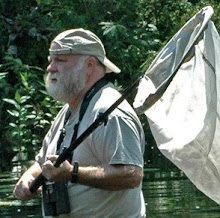
To many of my good friends November is a time for hunting. Whether following a spaniel through Grouse cover or staking out a deer run from a tree stand with bow and arrow many sportsman and women await the changing of the calendar to December and the traditional start of the Massachusetts Shotgun Deer Season. Its been awhile since I have walked the woods with gun in hand. Not because I'm against hunting, quite the contrary, I still purchase my Sportsmans license each year and enjoy a little venison shared by my successful hunting friends. It is more that it is not as high a priority in my life these days. I "hunt" throughout the year; whether stalking that rare bird or laying in wait along a babbling brook with net in hand watching for that elusive snaketail to get just close enough... Deer hunting for me is about the management value of hunting in reducing and maintaining the number of deer browsing the vegetation in our forests. As a manager at the Quabbin I have been intimately involved with the controlled deer hunt since its inception and believe it to be a very effective tool in restoring the reproductive processes in the forest. But it is work for me with longer hours and a responsibility to keep everyone safe while providing a quality experience for participents. So for now I'll hunt vicariously through my friends and hope they all have a successdul and safe season... And if your freezer is overful I'll be happy to provide some space in ours...


8-point Buck in the company of several does Quabbin 11-22-2009


Everyone should be reminded to wear blaze orange clothing whenever venturing out in the woods over the next month. Some form of deer hunting will continue through the rest of the year (excluding Sundays in Ma) and we should allow folks to persue this New England tradition.


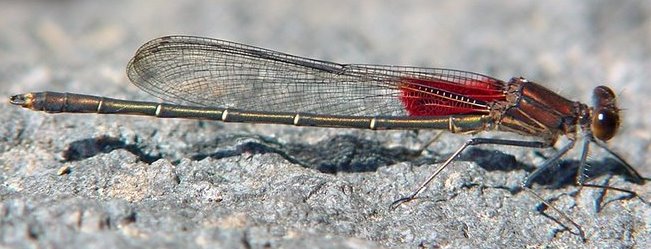
Autumn Meadowhawks still flying 11-22-2009


dave@dhsmall.net
http://www.pbase.com/dhsmall
Reblog this post [with Zemanta]

Sunday, November 15, 2009

We're not done yet - Autumn Meadowhawk still flying


Often by November 15th we have put away our nets and generally spend less time searching for insects and take more notice of the birds which have suddenly appeared at the feeder. The temperatures today reached the mid 50's and a walk around the yard found this Autumn Meadowhawk Sympetrum vacinum perched on one of my "snake boards" taking in the afternoon sun.

The leaves are gone From the trees, cleaned off the lawn and even out of most of the gutters now the the color of the day seems to be red... Besides the meadowhawk the berries of Winterberry (below), Crabapples and Cranberry bush Viburnan really steal the show... It has been our pleasure this year to spend a good deal of time planting wildlife friendly food plants around the yard and seeing them fruit the first year gives us a lot of satisfaction. Not a lot of berries yet but they will only get better as the shrubs and trees age. The most interesting thing we happen to see today was a large bat flying south in the twilight of a great sunset... I don't know much about bats but with all the concern for our bat populations any sighting is worthy of note...

dave@dhsmall.net
http://www.pbase.com/dhsmall

Wednesday, October 21, 2009

Scissor-tailed Flycatcher at Orange Airport

Its great to live in a small town full of people who enjoy natural history as much as I do. Not much gets by this crew. This morning at 9:00 AM Jeff Johnstone called my cell to report a young Scissor-tailed Flycatcher was hanging out on the fence at our local Orange Airport.


By the time I arrived there was a cadre of birders already on scene and more were on the way as word spread. The bird was most cooperative and hawked for insects around the area of the hangers.
 
Thanks to Jeff Johnstone for getting the word out so quickly
and holding on to the bird for us all to enjoy
dave@dhsmall.net
http://dhsmall.blogspot.com/
Reblog this post [with Zemanta]

Monday, October 19, 2009

The Pond Continues to Surprise

The afternoon sun made long shadows on the back lawn that had just this morning been covered with a dusting of snow. As I sat in my home office checking e-mails I caught a flash of white against the green lawn... A Great Egret glided to a landing and headed directly to the shore of our small pond.

This is the second heron species to visit the pond in its first year. The Great Blue Heron in August had a lot more tadpoles to choose from but at this late time of year the few remaining Green Frogs didn't hold the Egret's interest for long and it quickly moved on. I only got a couple quick pictures with my small camera. Just enough to document the sighting. The construction of the pond this last April has been the best addition to the yard we could have made... Build it and they will come...
dave@dhsmall.net
http://dhsmall.blogspot.com/
Reblog this post [with Zemanta]

Thursday, October 1, 2009

Eastern Hognose Snake - part II

 Eastern Hognose Snake Heterodon platirhinos
Illegal to harass, kill, collect or possess in MA.

The sun broke through the early morning clouds as Kiana Koenen and I searched the ground for signs of the young snakes discovered the day before by friends Mike Phillips and his wife Anita. Six Eastern Hognose Snakes were found sunning themselves along this well traveled Quabbin route. We knew at least one of the tiny snakes had been inadvertently struck and killed by a passing bicyclist or pedestrian. The snake’s cryptic coloration and habit of freezing to hide make them susceptible to human movement and any of a host of potential predators. We had returned to the area early to see if the young snakes were using the road’s heat to warm themselves and if there was something we could do to prevent additional fatalities.

Searching closely through the roads shoulder they suddenly came into focus 3 young snakes perhaps 6 inches in length were slowly moving in the patchy grass. Carefully looking into the grass at the edge of the shoulder making sure our feet were on the roads edge where we could continually watch that we not step on an unsuspecting Hognose we counted 5 snakes within several square feet. We searched up and down the shoulder and when finding no other snakes we returned to the spot and now counted 7 snakes.Pulling a couple 5-gallon plastic pails for seats from the back of the pickup, we stationed ourselves on the road and waited to see where these snakes were coming from. A movement in the grass showed yet another tiny snake pushing its way in the morning light. The sand encrusted skin is evidence of its sandy birthplace.

We sat and chatted watching the unfolding spectacle. A call to update herpetologist and friend Peter Mirick at MassWildlife helped enlighten us about some of the behavior we were witnessing. We sat and watched the clouds overtaking the sky bringing a chill to the air. A few minutes later a patch of blue regained the day beaming bright morning sun on the roadside and us. Almost immediately movement caught our attention as another snake appeared from below ground, than another and another. Fourteen in all! We watched as they moved in fits and starts out into the undergrowth shedding their skins along the way.

Could our young Hognoses be the offspring of this adult observed within 200 feet of our location in August 2001? We may never know but we hope that this is a good start for this generation of snakes. I have seen in these last 2 days 20 Hignose snakes which more than triples all the sightings of this species I've had in my lifetime. Thanks again to Mike and Anita for the timely phone call.


This young snake looks ready to take on the world

I would be interested to recieve images and location information on snakes in the Central Massachusetts. Hognose Snakes Heterodon platirhinos is of particular interest as they are now hard to find in many historic locations. Remember to always report observations of state listed species to MNHESP

dave@dhsmall.net
http://dhsmall.blogspot.com/

Reblog this post [with Zemanta]

Wednesday, September 30, 2009

Emerging Eastern Hognose Snake - Heterodon platirhinos


Thanks to Mike Phillips from Orange for calling me and telling me about the emerging Hognose snakes he discovered today while walking in Quabbin. I have seen more Hognose snakes today than I've seen in the last 20 years. Four!

Stay tuned for the rest of the story
dave@dhsmall.net
http://dhsmall.blogspot.com/

Monday, September 28, 2009

The Wall - Moth season winds down

For the last 2 summers I have been operating my Mercury Vapor light on most any warm night where I have the chance to check it through the evening. Moths being night beasts they often are showing up long after I should be in bed. But the lure of discovering something new outweighs the logical impulse for a full nights sleep.

The season for moths evolves like it does for many taxa. I admit to only focusing on the larger or more colorful well marked species. Spring and early Summer are filled with nights of Giant Silk Moths soon followed by Sphinx moths named for thier various food plants: Laurel, Virginia Creeper, and Northern Pine Sphinx.

The group that has really tickled my fancy this year are the Underwing Moths of the genus Catocala These guys somehow eluded my discovery last year and have been high on my "want to see list" all year. First of all they don't seem to fly until August which this year coincided with the first dry nights of the summer. Second they have a tendancy to not show up until after the Red Sox have completed a 12 inning night game...
8801 Catocala ilia - Ilia Underwing


But they are worth the wait with such common names as: Inconsolable, Dejected, Widow, Sad, Graceful, Wayward, Girlfriend, and Once Married they certainly have caught the imagination of early entomologists. We are fortunate to have the leading expert on this genus living right here in Massachusetts. The definitive work on the group is:  Legion of Night: The Underwing Moths by Theodore D. Sargent (Dec 1976). I first saw Ted in 1970 or so at UMass where Mass Audubon held the conference "Focus Outdoors" a weekend of  talks on all sorts of natural history subjects. At the time I was still pretty much following birds but was drawn to the engaging talk where I learned of some different uses for Dad's stale beer. Underwings can be attracted not only by lights but by an aromatic concoction of stale beer (actually yeasty micro brews are best) some brown sugar, Bananas, and other over ripe fruit, left to get pretty well fermented then smeared on tree trunks to await the evening moths...

Well so far my baiting for Moths has been less than productive but I have seen a half dozen species of Catacola so far. My latest is: 8805 -- Once-married Underwing Moth -- Catocala unijuga


It may be near the end of the moth season for us here in Athol but I'll still check on those warm Indian summer nights just to see what might show up.

For another look at Catacola's in Massachusetts see bill Oehlke's web site. Bill has been invaluable in helping me identify not only Catacolas but many of the Sphinx moths. Always if trying to identify moths from your pictures try the Moth Photographers Group and of course BugGuide for more help. Now time to go check the "Wall" one last time before hitting the rack... I may be back

http://dhsmall.blogspot.com/
Addendum

The Betrothed - Catocala innubens
No sooner had I hit the "Post" button and headed out for one last look at "The Wall" when I spotted this interesting speciman. The Betrothed! I will hate to see the hard frosts ahead as they will end my fascination with "The Wall" for this year...

Reblog this post [with Zemanta]

Saturday, September 19, 2009

Smooth Green Snake


Friday was one of those magic fall days. The foliage of Red Maples showing subtle shades of pink and yellow around wetlands. Clear bue skies dotted with occasional fair weather clouds hide the distant shapes of Broad-winged Hawks and Accipiters.
   Over the last couple years I have placed a few cover boards, 2' X 4' pieces of plywood in managed fields at Quabbin. These boards have been used by researchers to monitor many species of vertebrates including snakes and salamanders. These boards for the most part are great for attracting crickets and ants, fun for some of us, but a pain for budding herpetologists. One board out of all the ones I have placed has been a gold mine of snake encounters. Snakes including Common Garter Thamnophis sirtalis, Ring-necked Diadophis punctatus and Brown Storeria dekayi have all been found under this particular board in 2009. This time lifting the board produced the awesome sight of this Smooth Green Snake Opheodrys vernalis.


It has been a couple years since my last sighting of this species. Growing up in Royalston I encountered them often around the yard at Tully Dam. I would see them in the overgrown lawn when mowing and the pattern of the cutting would show the swerve as I moved to miss these little guys in their escape. Intensive mowing, domestic animals, and general habitat loss have taken their toll on these beautiful creatures and now I am thrilled to find even one of these emerald jewels.

I would be interested to recieve images and location information on snakes in the Central Massachusetts. Hognose Snakes Heterodon platirhinos is of particular interest as they are now hard to find in many historic locations. Remember to always report observations of state listed species to MNHESP

There are still warm days left and time to have our last looks at our reptile friends before they disappear for winter.

dave@dhsmall.net
http://dhsmall.blogspot.com/
Reblog this post [with Zemanta]

Thursday, September 10, 2009

Summer passes in The yard

Its been really great to watch the yard mature over the summer. The pond I originally thought was a vernal pool, when constructed last April, has blossumed into thriving mini ecosystem. Tadpoles of all forms, diving Beetkles Whirlygigs, Odonates laying eggs in the newly planted Pickeralweed... A lot of fun to watch... All the rain was hopefully abnormal and next year it will perhaps be a vernal pool. But no complaints here.
The hundreds of Gray Tree Frog tadpoles have matured. Many have succumbed to the visiting Great Blue Heron or the Blue Jays and Crows that spent time near the waters edge. Now the survivers can be seen on any day one spends the time to look. The tiny green metamorphs slowly taking on adult coloration and growing noticably each week.
One of the great things about deciding to leave a section of the back yard unmowed is seeing the late summer asters, goldenrods and other wildflowers overgrowing the grasses. The second much more plentiful, brood of Pecks Skippers is flying. American Copper, Great-spangled Fritillary, and American lady butterflies are all taking advantage of the combination of planted ornamental and the wild flower patches. All this life has brought along a few predators as well. No less than 5 Argiope aurantia - Yellow Garden Spiders grace the patches of tall flowers, while wasps of many species including the a female Velvet Ant were observed this past Monday as friends Lynn Harper, Eric Eaton, Jen Carlno and Nancy Goodwin cruised the yard with Shelley and I. (all of us "Entomologist Mimics" as Jen would say) Striped Garden Caterpillar - Trichordestra legitima (above) was observed feeding on Asters as were several Cucullia asteroides - Goldenrod Hooded Owlet caterpillar (below). It never ceases to amaze me what wonderful new animals we can find so close to home 


dave@dhsmall.net
http://dhsmall.blogspot.com/
Posted by Picasa

Reblog this post [with Zemanta]

Saturday, September 5, 2009

Watching Whales


One of the best things about New England is the proximity of so many varied habitats. This summer has been one for cloudy skies interspersed with torrential rains... At least that is how it seemed. As August turned to September the skies have cleared and fantastic warm dry weather has prevailed. Time to get out and enjoy it!
One of the summer adventures Shelley and I had been hoping to take part in came to pass this Friday, a trip to Stellwagen Bank. My sister Diane and nephew Sean arrived from Virginia to visit and joined by my other sister Ruth and husband Wayne we all embarked on a noon Whale Watch out of Long Warf in Boston.
The speedy catamaran ferried the 300 passengers to the edge of the Bank in less than an hour where a fleet of small fishing boats were observed. Among the small vesseles there were several Humpbacked Whales basking near the surface and lazily rolling in the quiet waters.
Of course I was also interested in any pelagic birds I could glean from vast waters and was not dissapointed as Greater Sheatwaters, Northern Gannet, Wilson Storm Petrals and several terns past by the boat as we searched for more Whales. We observed more than a half dozen different Humpbacked Whales and the much smaller Minke Whales also made appearences.
This was a great way to spend a family outing, enjoying the views of Boston and her harbor Islands, seeing a great show of the spectacular marine mammals and an assortment of birds, and catching up with family matters in the warm sunshine... But not the least of all was a post trip stop at Legal Seafoods for some great local cousine. The Bluefish and Grilled Scallops was wonderful supplemented with a nice Sam Adams Octoberfest. I want it on record that I actually left the comfort of Central Massachusetts to look at something other than insects... And enjoyed it immensly. Maybe next time I might even venture west of the Connecticut River...

Posted by Picasa

Thursday, August 27, 2009

Tigers in the Sand

Almost imperceptible at first, the tiny wisps of sand exploded from the sand. A few seconds passed and other wisp of sand sprayed from the hole... After a few minutes the worker poked her head out to survey the project. Our first glimpse of the wasp excavating a nest cavity
Saturday August 22, 2009; Friends Eric Eaton and Lynn Harper joined me for an exploration of a powerline cut through a sand barren in the DCR Ware River Watershed in the town of Oakham. Not quite the sands of Death Valley or Sahara but it is our own little window into life in the world of sand.

In New England we think of our native landscape as forested and full of trees... Left to its own devices the trees become old and tall. Disturbance of hurricane, fire, or flood can reset the sucessional clock but the process is predictable. Humans mimic these processes when they harvest trees for lumber to build their homes or firewood to heat it. We clear fields for farming and abandon them for nature to reclaim. We mine the landscape for sand and gravel leaving behind a moon scape. I have long been fascinated by this less obvious habitat type the plant free world of sand and the organisms adapted to this harsh environment.

Tiger Beetles long legged predators in the order Coleoptera are a fascinating lot. Able to quickly run down their prey of ants and other small insects and take flight quickly to evade capture. Netting these beetles is difficult, unlike most insects trapped under the net who fly upward they burrow under the rim of the net and quickly escape. Photographing these predators is a challenging event but stealth and patience can be rewarded.
The Festive Tiger Beetle Cicindela scutellaris (left) and Big Sand Tiger Beetle Cicindela formosa (Above) were present in good numbers at this sight.


The Tiger Beetle at left does not meet the species descriptions in my various sources my best guess is Cicindela rapanda but it will remain unnamed at this point. I'm just pleased to be able to observe these interesting insects in their world of sand


dave@dhsmall.net
http://dhsmall.blogspot.com/

Thursday, August 20, 2009

New at "The Wall" - Ultronia Underwing

As soon as I saw this larger moth I knew it was something special. At least to me. The light has been attracting a host of smaller moths for the last couple weeks that I struggle to figure out and struggle harder to remember one night to the next. It s like attending that class reunion and recognizing the person but not quite remembering the name... Anyway the heat of the last week has been a welcome change from the cool damp summer of 2009. Activity has been increasing and I've found great enjoyment watching the Gray Tree Frog metamorphs climbing the "moth wall" to watch the show...


August 18th 2009 reached 91 degrees and the heat continued into the evening hours. I was enjoying the evening show between innings of the Red Sox - Blue jays Game (we won 10 - 9)
11:30 PM I was taking one last look at the wall for the evening when this handsome moth rolled in. I knew it was new to me and for the yard list... I first found it facing downward on the lower wall. It took a while to get him to open his hindwings for a photo but he finally managed to cooperate after about a dozen blurred shots... I'm ID'ing this one as Ultronia Underwing Catacola ultronia


Tough getting up at 5:00 AM for work when all this action is happening outside your window... I'm becoming a big fan of afternoon naps...


dave@dhsmall.net
http://dhsmall.blogspot.com/


Reblog this post [with Zemanta]


Sunday, August 9, 2009

Zebra Clubtail - What are you doing in my Pond?

Female Stylurus Scudderi Zebra Clubtail 8-8-2009 Athol Ma
The 30 X 40 foot backyard pond we constructed this spring is such a blast to explore it is almost beyond words.. Yesterday was no exception. Returning from a wonderful day of learning about bees and Pollinators with friends Joan Milam and Eric Eaton at the Mount Grace Land Conservation Trust Headquarters, I was showing off my little wet part of the world when a teneral dragonfly leaped into flight and immediately crash landed into the pool... The hapless insect was valiantly stroking its way across the pool as I ran for my handy insect net and I was able to let the dragonfly crawl up on the nets ring and bring it to safety...

In the excitement I hadn't processed the distinctive markings on the thorax or brown abdomen with yellow rings.. I was focused on the rescue... In the back of my mind I was hoping for some rare elusive emerald or other oddity...

When I finally had the little beast in hand it became obvious I was looking at a Gomphid, eyes apart and distinctive thoracic pattern. The ringed abdomen quickly brought me to the identification of Zebra Clubtail Stylurus scudderi. This species is currently listed and protected by the Ma Natural Heritage and Endangered Species Program. I called Friend and Athol Resident Lynn Harper who is the Heritage Odonate person and she came right over and viewed our drying out specimen... The record will be included in the Heritage database and be just another piece in the puzzle of as we unravel the life histories of these insects.
In Blair Nikula's fine field guide to Dragonflies and Damselflies of Massachusetts he describes scudderi habitat as: "Sand bottomed streams and small rivers with riffles". This is hardly a description of our little pool.
We are uphill (more than 2500 feet) from of a stream which has a potential habitat for this species but I've not found it there as yet... I may look this afternoon. The elevation of our home at 885 feet does bring Hill-topping behavior as a potential answer to my question...
No matter how it got here we are happy to add this species to our growing yard list.

I wonder what we'll discover today?


dave@dhsmall.net
http://dhsmall.blogspot.com/

Friday, August 7, 2009

Moths know what date it is?

The more I observe nature the more questions I have. Last Summer I started watching the moths attracted to our Mercury Vapor light (which I only turn on when I plan to monitor Moths)
Well as life would have it I turn on my "Moth Light" almost every night I'm home. It has been an enlightening education into the night world.

Now it isn't unusual for Shelley and I on most evenings to grab a flashlight checking out the "Light" and then head out to patrol the flower beds around the yard just before we turn the Moth light off for the night and head to bed... Its amazing all the activity we have been missing in our diurnal world... If we could rid ourselves of our day jobs we could happily stay up even later...

The Moths pictured above are members of one of my favorite groups. Haploa's are medium sized striking moths with lots if individual variability within species... But what are the chances that the species emerges and finds our house on exactly the same date 2 years in a row?

Reading Ted Sargent's "Legion's of the Night" I found his dates for the Ilia Underwing Catacola ilia to correspond well with my discovery of this species at Quabbin... It was a very tight window of a week or so that Professor Sargent had recorded the species.

But this summer is very different than last. We've all complained about the rainy cool weather. The lack of butterflies and river dragonflies in June and July... But here right on schedule is Haploa clymene...

Maybe the world will OK after all

dave@dhsmall.net
http://dhsmall.blogspot.com/

Reblog this post [with Zemanta]

Thursday, August 6, 2009

Gray Tree Frogs metamorphs in the yard


After having constructed what I had thought would be a vernal pool in the yard this spring. We have been delighted with the constant entertainment it has brought us and the increase in our bio-diversity is beyond all our expectations...

American Toads Bufo americanus Green Frogs Rana clamitans and Gray Tree Frogs Hyla versicolor have been seranading us over the last several months. Tadpoles soon filled the pool joined by various Hemiptera like Backswimmers, Water Boatman and Water Striders. Odonates including Common Whitetails Libellula lydia, Twelve-spotted Skimmers Libellula pulchella were soon joined by eastern Forktails Ishnura verticalis, Fragile Forktails Ishnura posita. and even Sedge Sprites Nahelana irene graced the nearby flower beds.

But life in the wild is about predators and prey a constant parade of winner and losers in the game of life... The other morning the dynamic shifted slightly in favor of the prey items of the frogs as a Great-blue Heron arrived just after dawn. Undaunted by my approach for a photograph the heron gobbled up many tadpoles and young frogs as I watched.
The pond still has a lot of tadpoles left and the miniature lime green Gray Tree Frogs are scattered throughout the yard. I can rest assured that the best adapted (and lucky) of our young animals have survived the Herons presence... At least for today..


dave@dhsmall.net
http://dhsmall.blogspot.com/

Reblog this post [with Zemanta]

Sunday, August 2, 2009

Dragonfly Society of America - Northeast Meeting

One of the great things about our naturalist hobby is the wonderful people we meet as we pursues the wild creatures that peak our interest. This past week (July 31 to August 2nd) The Dragonfly Society of America - Northeast Meeting was held in Southeastern New Hampshire hosted my New Hampshire Audubon's Senior Scientist Pam Hunt. Friday morning field trips we curtailed by Thunderstorms the seemingly usual rain events of this wet and cold summer... Saturday broke with bright sunshine and about 60 dragonfly enthusiasts gathered at the Massabesic Audubon Center in Auburn New Hampshire. Hal White presented an engaging talk on the lesser known female entomologists who pioneered the study of Odonata in the Northeast. And our fearless leaders outlined potential sites to be visited during the day.

Now a little about the dragonflies. Pam was interested in filling the species lists for all New Hampshire towns so the group had a very useful purpose for the weekend. Pam was not disappointed in the outcome as the group scattered to the selected haunts. In all of these gatherings individuals are always hoping to discover new species for their personal life list and this event was very successful in that regard for myself. I was able to add 2 species to my New England list which is a pretty good accomplishment...

One new Species for me was the Scarlet Bluet (Enallagma pictum) found at Norton Pond in Raymond NH. Several pairs were seen ovipositing in the lily pad covered pond edge. Another of my favorite damselflies the Lilypad Forktail (Ischnura kellicotti) were observed perched on the abundant lilypads.

A fine picnic BBQ was organized Saturday Evening at the Kingston State Park and most organizations would have called it an evening but the crepuscular habits of many of the Darners and Emeralds found the net toting enthusiasts gathered at a local dog park in Kingston. The abundant mosquito's provided plenty of food for the dragonflies while we kept the mosquitoes well fed as well. Almost immediately after exiting the truck I needed my second life bug of the day a female Coppery Emerald (Somatochlora georgiana) This individual was donated to Ed Lam and may grace the pages of his Petersen Field Guide to Dragonflies which should hit the shelves in 2011...


So my thanks go out to Pam Hunt, Brian Pfiefer, Nick Donnelly, Nancy Rideout and all the members of the DSA who made this event another to remember.


Reblog this post [with Zemanta]

Wednesday, July 29, 2009

Night meetings aren't all Bad

My position at the Quabbin requires attendance at numerous night meetings and this Monday was no exception. Two hours in a crowed room, swatting mosquitoes, drawn by the exhaling crowd, and listening to the emotionally charged conversation. Lightning flashed in the night sky over Quabbin Reservoir as the crowd dissipated. Jonathan Yeo and I exited out the rear door locking up the office for the night when a large moth flashed from the breezeway.

Ilia Underwing Catacola ilia (8801) Underwings are a wonderful group of moths whose cryptic coloration keeps them well hidden from predators until the flash of the colorful under wing pattern startles the would be predator allowing a hasty escape. I first heard about them in the 1970's at Focus Outdoors at UMass where the renowned entomologist Ted Sargent talked of baiting moths with sugar and stale beer (Dad's beer was never safe again). Underwings were Ted's favorite; secretive and not usually attracted to lights making the development of special baits a kind of competition to find the secret ingredients that will fool these mysterious moths into view. Ted Sargent was also fascinated by the English names given species in this group of moths including the Sweetheart, Darling, Once-married, Mother, and the Penitent.

I don't see these beauties very often and this Ilia Underwing was the first I've been able to photograph in recent times. A great way to end an evening

Reblog this post [with Zemanta]

Sunday, July 12, 2009

Butterflies in short Supply

The Athol Bird and Nature Club used to take the summers off as birds were busy with nesting activities and members headed off for sunny beaches or focused on the home garden. The rising popularity of insect watching as led to a plethora of summer workshops and local trips in search of Butterflies, Dragonflies and other interesting members of the smaller world.

Saturday was one of those workshops. A dozen members and new friends joined Susan Heinricher and I at the Millers River Environmental Center for an overview of butterfly identification and then we were off to a local milkweed filled field for what I had hoped would be some great viewing of our local butterflies.

The flowers were abundant, the butterflies were not. The list included Monarch, Viceroy, Tiger Swallowtail, Great Spangled Fritillary, Common Ringlet, Summer Azure, Silver-spotted Skipper, Delaware Skipper and Little Glassywing. But instead of dozens of each species we only encountered about 20 individual butterflies and those we really had to work for, Perhaps the months of rain and wet weather has stressed our local populations. The best thing about insects if their ability to rebound, Able to lay hundreds of eggs at a time a bad season can be quickly
made up when conditions improve.

A subset of the group not saying "Uncle" traveled to my old stomping grounds of Tully Lake. Sharing the wet spillway meadows with the Disc Golf enthusiasts we quickly found American Copper and dozens of our target species the Bog Copper.
Aphrodite and Silver-bordered Fritillary were added to the days list, but as the group made its way along this wet open meadow a shift to Odonates began to emerge, The Variable Dancer Argia fumipenis, Slender Bluet Enallagma traviatum Calico Pennant Celithemis elisa, Halloween Pennant Celithemis eponia, Common Green Darner Anax junius, Spangled Skimmer Libellula cyanea, and dozens of my favorite little dragonfly the Elfin Skimmer Nanothemis bella

The real star of the show for me were several Eastern Red Damsels Amphiagrion saucium.
These diminutive damselflys have escaped detection locally for both Lula Field and I. Our friend Earle Baldwin has claimed finding them at two local locations (I guess now I'll have to concede and quit giving him grief) At any rate the Odonates saved the day and we wound up with a respectable list of these wonderful creatures...

Today we are off to the Ware River Watershed in Central Mass. This relatively unkown 24,000 acre area is part of the DCR Division of Water Suppy Protection's Quabbin Region. Skies are clearing after yet another rainy night... Who knows what will catch our eye today... Stay Tuned


Monday, July 6, 2009

4th of July Butterfly Counts


Finally a sunny weekend and just in time for the NABA 4th of July Butterfly Counts. I had the pleasure of attending 2 counts this weekend. The first North Worcester County Count was organized by Carl Kamp and the Wachusett Meadows gang with a Great after count BBQ by the Walker Family. This was a nice day for my wife Shelley and I to spend some quality time away from the garden chores bouncing around some interesting habitats and having fun... The second was the Eastern Franklin County count organized by Mark Fairbrother centered around Turners falls. I had the pleasure of the Company of my new friend Eric Eaton who is here for a few months from Tuscon.

Both counts were a lot of fun and a great chance to hang out with friends from both east and west of our Athol home base. Butterfly diversity and number of individuals on both counts were low. This perhaps due to the recent monsoons frustrating entomology buffs for weeks... But as always a day in the field brings interesting sightings and experiences. Sunday Eric and I found this interesting coupling of a Little Glassywing with a European Skipper... Will we return next year to this field to find European Glassywings?
There were many highlights for the day including a Spadderdock Darner Aeschna muttata which we stumbled upon as we exited a particularly rich patch of overgrown field near the Connecticut River in Northfield. Eric and I exchanged our enthusiasm and knowledge of the various insects we came across making for a fun and interesting day... Between us the insects didn't have a chance to escape our constantly clicking cameras.
I hope the folks conducting other counts over the weekend and the big Waldon Pond Bioblitz had as much fun as we did enjoying the first sunny weekend in a long time and our beloved invertebrates...


Posted by Picasa

Saturday, June 27, 2009

There Here! Moths arrive for weekend

7757 Antherea polyphemus Polyphemus


Friday nights are often a time for layed back relaxation from the week's hectic pace. I spent the beginning of the week at UMass attending the International Urban Wildlife Conference Congratulations to Stephan DeStephano and his team for a near flawless conference with great speakers, good food, and lots of old and new friends... I've been turning on my Moth attracting light for a few hours most nights to sample what is flying. Tonight after all the evenings of rain things are popping...

Polyphemus and Luna Moths were the Main event but dozens of other wonderfully patterned moths, Mayflies, beetles and Crane Flies dotted the sheet as the evening progressed.
I reflect back at the "Moth Ball" and the hard work our human visitors took to get to our 65 species for the night... I'm certain tonight we could easily eclipse that night's species count...

It will take some time for me to check out the ID of many of tonight's lepidopteran guests but a wonderful night it is and happy to be able to provide some habitat for these species and will turn my light off before dawn and chase my evening visitors away before the House Wrens, Chipping Sparrows and Blue Jays make the morning search of the "Moth Wall"


Thursday, June 18, 2009

Blogging opening Day

I'm trying this after reading Eric Eaton's Blog after his visit here the other night for an evening of Mothing dubbed the "Moth Ball" by our merry group of naturalists. Eric's Blog can be found at: http://bugeric.blogspot.com/